The Ambiguous Grief of a Missing Pet

There is a particular kind of grief that comes, not with closure, but with a question mark. And it is heartbreaking.

When a pet dies, painful as it is, there is certainty. However, when a pet goes missing or is stolen, there is no such certainty. Instead, there is a space filled with uncertainty, where hope and grief coexist in a way that can feel both relentless and exhausting. It leaves pet parents living in a space between hope and loss seeking answers that may never come which is a devastating place to be.

When a pet is missing, you might imagine them wandering nearby, waiting to be found. You might picture someone kind taking them in and letting them curl up in front of a cosy log burner. Or, just as suddenly, your thoughts may take a darker turn imagining scenarios which cause intense distress and upset.

This constant shifting between hope and fear creates an emotional purgatory. You are grieving, but you don’t feel free to fully grieve. After all, what if they come back tomorrow? There is always that hope as sometimes miracles do happen. I’m sure we have all seen news articles about cats in particular wandering home weeks, months and even years after their disappearance.

So you wait. And wait. And wait…

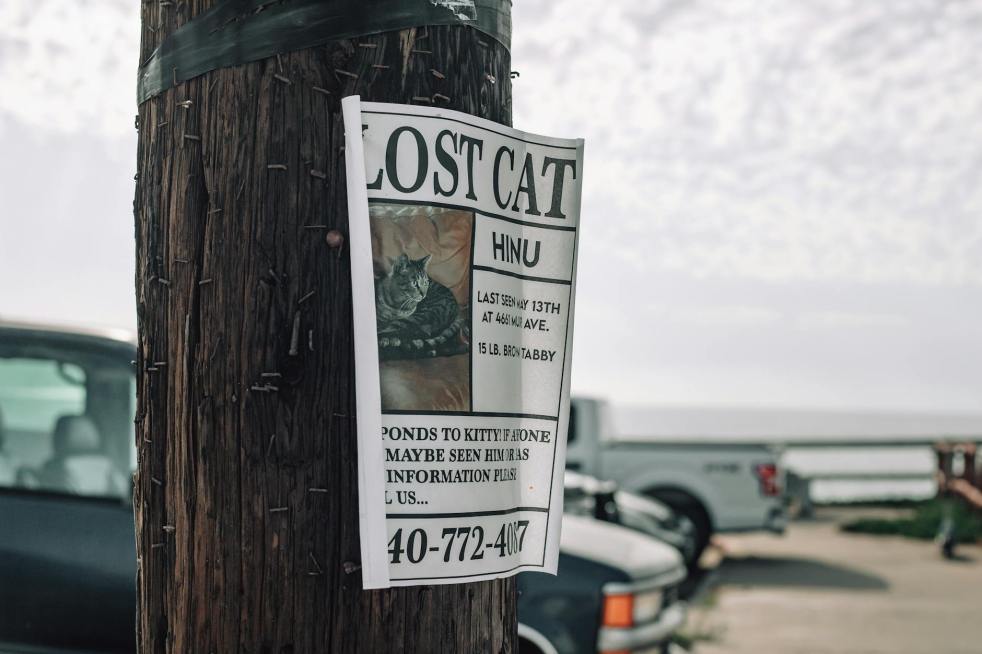
In the early days, action fills the space – printing posters, posting on social media, knocking on doors, calling shelters, walking familiar routes. Every sighting, every possibility brings a surge of hope. Maybe this is it. Maybe this is the moment they come home.

But as time stretches on, the search changes shape. It becomes quieter, less visible to others. People stop asking for updates. Life around you resumes its normal rhythm but yours doesn’t. Even months or years later, you might still scan the street when you see a similar-looking animal or check in with local missing pet groups/shelters.

As with other forms of grief, the loss of a missing pet is often misunderstood. There’s no ceremony, no shared acknowledgment, no clear social script for how to respond. Some people may try to comfort you with optimism with comments such as “They’ll turn up,” or “Pets are resilient.” Others may unintentionally minimize the loss which brings us into the realm of disenfranchised grief. “It’s been a while, maybe it’s time to move on.”

But moving on implies certainty. And certainty is exactly what you don’t have.

This can leave you feeling isolated, caught between needing support and feeling like your grief isn’t valid enough to ask for it. I would like to give you some reassurance that your grief is valid so if you feel that support is needed, please know it’s there for you.

Ambiguous grief is heavy with unanswered questions, guilt and what ifs:

  • What if I had checked the gate one more time?
  • What if I had searched a different street that day?
  • What if they’re still out there, waiting?

These questions can loop endlessly, because there is no resolution to stop them. Unlike other forms of grief, there is no definitive narrative to settle into, only possibilities. And possibilities can be painful. There will always be unanswered questions and a whole lot of emotions happening all at the same time.

One of the hardest parts of this experience is learning to hold two truths at once:

  • You may never know what happened.
  • Your love for your pet is real and enduring.

It’s ok to hope and to grieve at the same time. It’s ok to ‘keep the door open’ while also acknowledging the pain of their absence. Ambiguous grief is not something you can fix, it’s something you learn to carry. And if there comes a point when you can let go and find a way to move past this heartbreaking experience, that’s ok too. Please don’t feel guilty for that. And don’t feel guilty for not thinking about them every second of every day. That doesn’t mean you stopped loving them.

There is no perfect way to navigate this kind of loss, but there are ways to make space for your feelings:

  • Create your own form of acknowledgment: Even without closure, you can honour your pet—through a journal, a small memorial, or simply setting aside time to remember them.
  • Set gentle boundaries with hope: It’s okay to continue looking, but also ok to rest or take a break. You don’t have to be in constant search mode to prove your love.
  • Talk about them: Share stories, say their name, remember their quirks. Your connection didn’t disappear when they did.
  • Seek understanding spaces: Not everyone will understand, but some people will. Finding even one person who “gets it” can ease the isolation.

With a missing pet, there may never be a traditional goodbye. Instead, there is an ongoing bond. A bond that lives in your heart and memory. You may find yourself speaking to them in quiet moments. You may still celebrate their birthdays or gotcha days. You may always wonder.

If you are living with the absence of a lost or stolen pet, please know that your grief is valid, even without answers or closure. Your love did not vanish when they did.

Dog Theft – How to Reduce the risk of becoming a victim

The recent increase in cases of dog theft is horrifying. It is without a doubt a cruel and evil thing to do. Anyone engaging in this is, in my humble opinion, an absolutely heartless scumbag. The best thing about having my own blog is that I can freely express my views on the matter, and I will do so unapologetically.

As a dog mum, dog walker and pet bereavement counsellor I find it shocking that anybody would be so desperately greedy that they would cause so much distress to not just the animal but also the people left behind. It breaks my heart to think of how utterly terrified Pixie would be in that situation. Alone and scared, wondering when I’m coming to rescue her from these awful people in an unfamiliar place. Anyone who knows us would agree that we belong together, and I wouldn’t hesitate to use ‘reasonable force’ to protect her. Definitions may vary…

My heart also breaks for the human victims who have suffered at the hands of these vile individuals and gangs. I can only begin to imagine the devastation this would cause. Not only would they be experiencing the full spectrum grief emotions experienced during pet bereavement, but they would also have the added distress of not knowing what became of their beloved family member. Would those unneutered bitches be taken to a puppy farm to be bred from relentlessly in often disgustingly unhygienic conditions? Would others be sold on to unsuspecting people satisfying the demand? Victims would never reach the stage of acceptance and never gain closure unless they were lucky enough to be reunited with their companions.

So, what is causing this and what can we, as a society, do about it? Well, simply it’s the economy of supply and demand. These poor loving souls are viewed as nothing more than a commodity.  With so many people experiencing loneliness and indeed boredom during the pandemic, it has become obvious that there is an upward trend in the amount of people wanting a dog. Most people will want a new puppy or a designer/fashionable breed, which there has only been a limited number of available. At this point, unfortunately, I’m going to take a swipe at breeders. Many will know that I come from a family of KC registered Labrador breeders however my parents retired from this decades ago. Breeders have not helped this situation at all by increasing their prices for no other reason than just because they can. People are willing to pay more for the breeds they want, and that demand is being fully exploited which I find very distasteful indeed. This has had the catastrophic ripple effect of criminals stealing dogs to order to meet this demand which can not been met by breeders. Puppy farms have also sprung up and cashed in exploiting the situation further which has resulted in many people buying desperately unwell puppies which have contracted illnesses such as parvo virus and died within days of reaching their new homes. Which leaves the buyers grieving and out of pocket by upwards of £2000 in some cases.

I have blogged previously about our friends Bring Your Pet Home http://www.byph.org who work tirelessly to reunite pets and their people, but it is an incredibly difficult thing to do and especially so with such a dramatic increase in the number of cases. In the same blog we examined the legal classification of pets. Sadly, they are treated as personal property (chattel) so even if you are visibly distraught with worry when reporting to the police, this will not be treated with any more care or urgency that if someone had knicked your mobile phone. I strongly believe that the law needs to change on this. Police don’t make the law; they only enforce it. So, in the meantime, prevention seems the best way to combat this issue. My recommendations are as follows:

  • Adopt. Don’t shop. There are plenty of dogs looking for their forever homes in rescue centres and shelters. I rehomed Pixie privately and it was the best decision I ever made. She’s my best friend and I love her more than I can possibly put into words. Which is really saying something considering I’m a blogger and author! This also lessens demand for certain breeds of dogs and keeps ‘retail’ prices lower.
  • Never buy a dog from the internet. Websites such as Gumtree are frequently used by criminals to sell stolen and puppy farm dogs.
  • Make sure your dog’s microchip details are recorded accurately and are up to date. Recently there have been cases whereby details are recorded incorrectly which makes it incredibly difficult to find out where the dog belongs.
  • DO NOT LEAVE YOUR DOG TIED UP OUTSIDE A SHOP. This is in capitals because yes, I am shouting at you if you do this. I see it all the time when I’m driving around, and it makes me feel very anxious. This is an invitation to dog thieves. Don’t do it.
  • Make sure your garden is secure and don’t leave your dog unattended.
  • Avoid letting younger children walk your dog by themselves.

When walking your dog…

  • Make sure you have your mobile phone with you and that it is sufficiently charged. You may need to call for help or take a photograph of thieves and/or their vehicle.
  • Vary your route. Particularly if you have a breed which is in demand. You may have already been spotted and targeted.
  • Pay attention. You should be paying attention to your dog anyway but very often I see people chatting away on their phones completely oblivious to their dog’s whereabouts (and often the fact that they are pooping which gives us all a bad name).
  • Be aware of your surroundings and people around you. It’s O.K. to walk away from people who make you feel uncomfortable. Particularly if they want to photograph or pet your dog. If you’re not happy, don’t allow it. Never ignore your gut feeling.
  • If you feel vulnerable, arrange to walk with a friend or neighbour. You might also want to have a whistle or personal alarm. I have a personal alarm strapped to my arm when I’m out walking. No shame in it. Better to have it and not need it than need it and not have it.

My biggest tip of all is, do not let these evil people rob you of the joy of pet parenting. Chances are, you’ll be absolutely fine and statistically there are more of us than there are of them. Be alert, be smart but also be present and enjoy every moment with your beloved companion.