
Understanding Pet Loss in the Neurodiverse Community

There is no right or wrong way to grieve a pet whether you are neurodiverse or neurotypical but for a neurodivergent person, the loss may be particularly intense because they haven’t simply lost a companion. They may have lost their routine, their safe space, their emotional anchor and one of the most uncomplicated relationships in their life. While there are many core neurodivergent conditions, I’m most familiar with ADHD (having this diagnosis myself) and autism.

For some people, losing a pet is not simply losing an animal. It is losing a best friend, a source of comfort, a reason to get out of bed, a familiar presence at the end of a difficult day and, sometimes, the one relationship that felt completely safe.

For someone who is neurodivergent, particularly someone with ADHD or autism, pet loss can feel overwhelming in ways that are difficult for others to see or understand. The grief may be enormous. But what makes it even harder is that it may not always look like grief to the people around them.

For many autistic people, animals can offer a uniquely safe relationship. A pet doesn’t expect eye contact, understand social rules or require complicated conversations. They simply love unconditionally. Their presence can provide comfort during sensory overload, anxiety or difficult days. Their routines can create predictability: breakfast at the same time, a walk after work, cuddles on the sofa before bed.

When that animal dies, their absence can feel like the world has turned upside down. There is suddenly no familiar sound of paws on the floor. No face waiting at the window. No warm body beside you. The routine that helped structure the day has disappeared.

For someone with autism, this sudden and permanent change can be deeply distressing. It isn’t only emotional pain; it can feel like the entire rhythm of life has been disrupted.

For someone with ADHD, a pet may have provided something equally important: structure, motivation and connection. A dog may have been the reason to leave the house. Feeding a cat may have been one of the anchors of the morning. Caring for an animal can provide external structure when managing time, tasks and routines is already difficult. When the pet is gone, those anchors disappear too.

Grief doesn’t always look like crying

One of the most important things to understand about neurodivergent grief is that it may not look the way society expects grief to look.

Someone may cry uncontrollably. They may become completely silent. They may experience a shutdown or meltdown. They may struggle to eat, sleep, work or communicate. There may be an increase in stimming behaviours. They might talk about their pet constantly, replay the final days, ruminate, search for answers or repeatedly tell the same stories about them.

To somebody else, this might appear excessive or as though they are “not moving on” but repetition can be part of processing. Talking about the pet can be a way of making sense of something that feels impossible to accept.

Equally, a person may appear remarkably calm. They may return to work, laugh with friends or continue their normal activities but that doesn’t mean they aren’t heartbroken. Some neurodivergent people mask their emotions because they have learned that their natural responses aren’t always understood by society. Others may process feelings internally or experience delayed grief, where the reality of the loss doesn’t fully sink in until days or weeks later.

With ADHD, grief can also amplify difficulties with concentration, memory, motivation and emotional regulation. Everyday tasks can suddenly become exhausting. Someone who normally struggles with executive functioning may find even basic responsibilities almost impossible. Their pet may have been there when friendships were difficult, when sensory overload became unbearable, during periods of loneliness and on days when simply getting through the day felt like an achievement. The pet didn’t judge them. They didn’t demand that they behave differently. They were simply there, loving and accepting.

Five ways to support someone with ADHD or autism after pet loss

1. Validate their grief.
Tell them that their loss matters. Avoid comparing it to other bereavements or putting a timeline on it. It takes as long as it takes.

2. Don’t judge how their grief looks.
Crying, silence, anger, repetition, withdrawal, humour, stimming or appearing
unaffected can all be ways of processing grief. Don’t assume you know what is
happening internally.

3. Offer practical help.
Grief can make executive functioning even harder. Offer specific support such
as preparing food, helping with household tasks, going for a walk or simply
sitting with them. A really useful resource is the Emotion Sensation Feeling
Wheel which is available at www.lindsaybraman.com and helps those struggling to identify their emotions.

4. Understand the importance of routine.
The death of a pet can remove a huge part of someone’s daily structure. Gentle
support with maintaining meals, sleep, exercise and familiar activities can
provide stability while they adjust. They may need reminders to take medication
due to this routine being disrupted.

5. Let them remember their pet.
Don’t be afraid to say the animal’s name. Look at photographs with them. Listen
to their stories. Help them create a memory box, photograph album or other
tributes if they want to. Remembering isn’t “dwelling” — sometimes it is how we
learn to live with the love that remains.

We’ll take a deeper dive into this in another blog but for now, I hope this was useful.
The Ambiguous Grief of a Missing Pet

There is a particular kind of grief that comes, not with closure, but with a question mark. And it is heartbreaking.

When a pet dies, painful as it is, there is certainty. However, when a pet goes missing or is stolen, there is no such certainty. Instead, there is a space filled with uncertainty, where hope and grief coexist in a way that can feel both relentless and exhausting. It leaves pet parents living in a space between hope and loss seeking answers that may never come which is a devastating place to be.

When a pet is missing, you might imagine them wandering nearby, waiting to be found. You might picture someone kind taking them in and letting them curl up in front of a cosy log burner. Or, just as suddenly, your thoughts may take a darker turn imagining scenarios which cause intense distress and upset.

This constant shifting between hope and fear creates an emotional purgatory. You are grieving, but you don’t feel free to fully grieve. After all, what if they come back tomorrow? There is always that hope as sometimes miracles do happen. I’m sure we have all seen news articles about cats in particular wandering home weeks, months and even years after their disappearance.

So you wait. And wait. And wait…

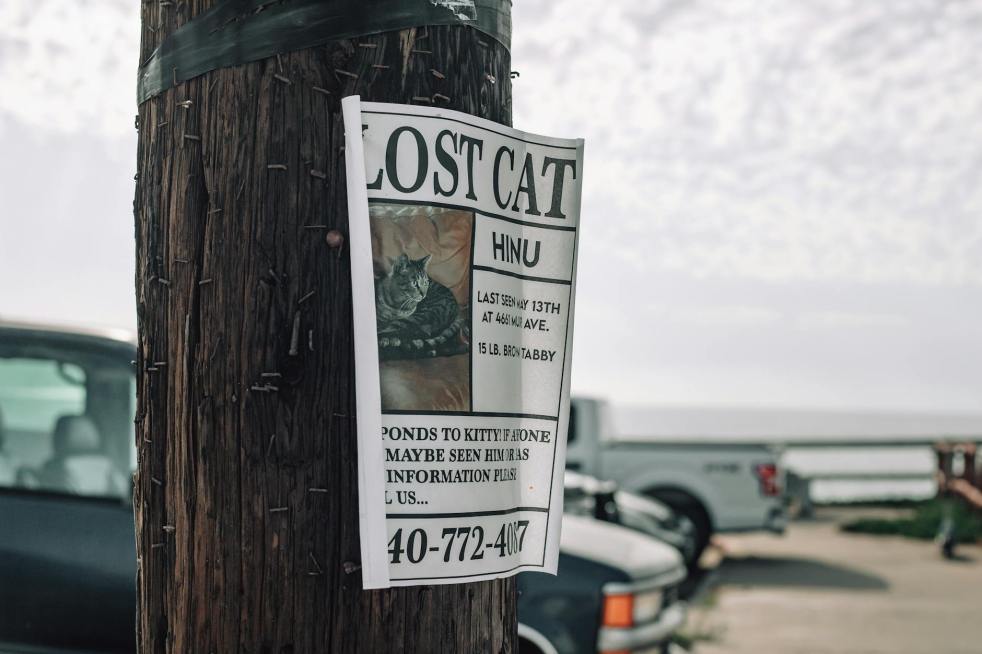
In the early days, action fills the space – printing posters, posting on social media, knocking on doors, calling shelters, walking familiar routes. Every sighting, every possibility brings a surge of hope. Maybe this is it. Maybe this is the moment they come home.

But as time stretches on, the search changes shape. It becomes quieter, less visible to others. People stop asking for updates. Life around you resumes its normal rhythm but yours doesn’t. Even months or years later, you might still scan the street when you see a similar-looking animal or check in with local missing pet groups/shelters.

As with other forms of grief, the loss of a missing pet is often misunderstood. There’s no ceremony, no shared acknowledgment, no clear social script for how to respond. Some people may try to comfort you with optimism with comments such as “They’ll turn up,” or “Pets are resilient.” Others may unintentionally minimize the loss which brings us into the realm of disenfranchised grief. “It’s been a while, maybe it’s time to move on.”

But moving on implies certainty. And certainty is exactly what you don’t have.

This can leave you feeling isolated, caught between needing support and feeling like your grief isn’t valid enough to ask for it. I would like to give you some reassurance that your grief is valid so if you feel that support is needed, please know it’s there for you.

Ambiguous grief is heavy with unanswered questions, guilt and what ifs:

  • What if I had checked the gate one more time?
  • What if I had searched a different street that day?
  • What if they’re still out there, waiting?

These questions can loop endlessly, because there is no resolution to stop them. Unlike other forms of grief, there is no definitive narrative to settle into, only possibilities. And possibilities can be painful. There will always be unanswered questions and a whole lot of emotions happening all at the same time.

One of the hardest parts of this experience is learning to hold two truths at once:

  • You may never know what happened.
  • Your love for your pet is real and enduring.

It’s ok to hope and to grieve at the same time. It’s ok to ‘keep the door open’ while also acknowledging the pain of their absence. Ambiguous grief is not something you can fix, it’s something you learn to carry. And if there comes a point when you can let go and find a way to move past this heartbreaking experience, that’s ok too. Please don’t feel guilty for that. And don’t feel guilty for not thinking about them every second of every day. That doesn’t mean you stopped loving them.

There is no perfect way to navigate this kind of loss, but there are ways to make space for your feelings:

  • Create your own form of acknowledgment: Even without closure, you can honour your pet—through a journal, a small memorial, or simply setting aside time to remember them.
  • Set gentle boundaries with hope: It’s okay to continue looking, but also ok to rest or take a break. You don’t have to be in constant search mode to prove your love.
  • Talk about them: Share stories, say their name, remember their quirks. Your connection didn’t disappear when they did.
  • Seek understanding spaces: Not everyone will understand, but some people will. Finding even one person who “gets it” can ease the isolation.

With a missing pet, there may never be a traditional goodbye. Instead, there is an ongoing bond. A bond that lives in your heart and memory. You may find yourself speaking to them in quiet moments. You may still celebrate their birthdays or gotcha days. You may always wonder.

If you are living with the absence of a lost or stolen pet, please know that your grief is valid, even without answers or closure. Your love did not vanish when they did.

Pet Loss & Prison

This week I visited one of Glasgow’s most notorious buildings with my partner in crime, the lovely Frank. Barlinnie Prison.

I booked this visit as a research trip for a fiction book I’m writing & when I told my contact that I am a Pet Bereavement Counsellor & have a book on that also, they were keen to get it into the library. I brought along a gift copy for a staff member who had suffered a pet bereavement in particularly tragic circumstances but obviously there is a process for the library. We’re also discussing a few other things I can do to support prisoners through this forced separation & indeed the death of their companion animals.

Everything in this hyper masculine environment is heightened so it’s important that support is available for everyday issues such as pet loss. It’s tough enough on the outside but imagine for a moment how it must be inside… This is a multi-faceted issue with added layers because of the situation, environment & culture. Imagine grieving in a place where you simply cannot show any weakness or vulnerability…

This was one of the most fascinating & interesting afternoons of my life. I had never set foot in a prison before & although I was keeping an open mind, my mind was indeed blown.

Driving up Lee Avenue, this building gives nothing away. It is of course an imposing structure but the modern façade is neither intimidating nor comforting which I suppose is a good thing. I still felt quite anxious despite the fact I was free to leave at any time.

My contact greeted us once we had shown our identification and passed through security. I really don’t think we could have had a better host or guide for our visit. We entered via the most solid door I have ever seen into a beautiful garden area with fantastic metal sculptures made by prisoners in their workshop, polytunnels and hanging baskets. The visiting area was much as you see on television but with a booth for teas and coffees, vending machines with snacks and chocolate and there is a separate brightly decorated children’s visiting area full of toys and colourful chairs. I was very aware of the brave faces that many of the prisoner’s partners were putting on and have nothing but respect for them. I saw the smiles and observed the exhaustion and pressure they are under to maintain the home, look after the children, maybe hold down jobs, pay all the bills as we face an energy crisis all while providing the things their partner might need such as new trainers or a radio. Albeit the prison does actually have it’s own radio station. I don’t yet know how popular it is or what the content is but I’m sure GBX is still a requirement for the younger demographic to keep spirits up.

As we entered the recreation area, I was instantly and pleasantly surprised by the atmosphere. It definitely wasn’t as grim as I was expecting. Both the staff and inmates were very welcoming, and I felt quite at ease walking past the rows of pool tables which were overlooked by some particularly good paintings by inmates created in the art area, including our beloved landmark of the Duke of Wellington sporting a traffic cone on his head. Onwards and into the library, I enjoyed a brief chat with the two prisoners who run the library and they honestly could not have been nicer. There was a great sense of pride from them and rightly so as they were incredibly knowledgeable, the library was immaculate and full of amazing books by incredible authors. Obviously, the crime fiction section was by far the biggest, but I think we’ll be in either the health or maybe the short reads section. As pleasant and gracious as my hosts were, of course there were the questions ‘What did you do? & Why are you here?’ lingering in the air that you just don’t want to ask. It could have been rape, murder or the same mistake/bad decision the rest of us have made but not been caught for… It’s really none of my business of course but the curiosity is always there.

My contact, who has worked at the prison for decades, gave a fascinating insight into their experience, how times and attitudes have changed throughout their eventful career and introduced us to other staff members who were equally informative & keen to share the positive aspects to what they do. I was really struck by the dedication to the provision of care every staff member showed and it’s great to see so much attention being paid to mental health and wellbeing. I was very impressed.

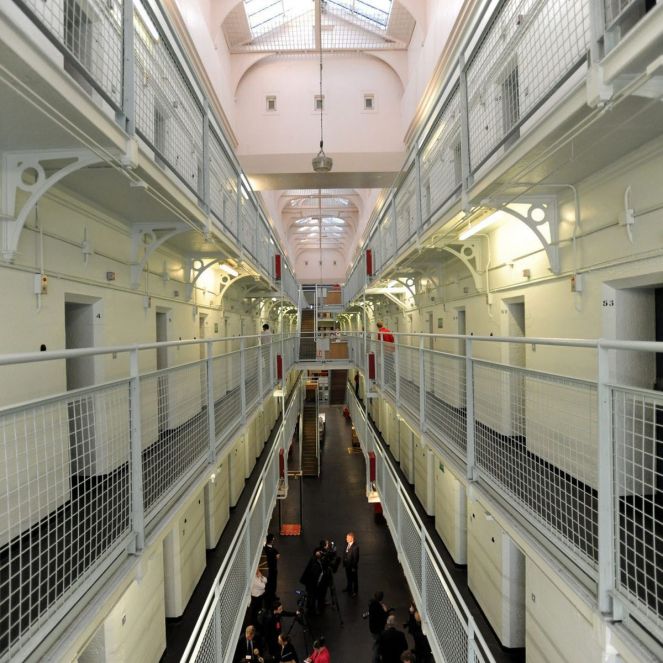
While there is a huge & welcome focus on rehabilitation as opposed to punishment and the prison is as nice as it possibly can be, it was B Hall that has really left its mark on me. Built in 1890 it really is from a different time. All those tiny little doors all the way along & all those floors high leading into tiny little cells was really overwhelming. All those hours, days, weeks, months and years in such a small space would be challenging for the most resilient of us. It might be ok on your own or with good company, but I imagine the experience would be entirely different if you were doubled up with someone you didn’t like or worse, were afraid of.

It’s taken me a couple of days to process everything I have seen & felt. I have had the tiniest glimpse behind those locked, solid metal doors and razor wire but this is how life is for a lot of people, not just here in Glasgow but across the whole country. I know how lucky I was to be born into my family & environment and raised with the tools to equip me for life. I have never taken that for granted. I’ve always worked hard to maintain that & live with purpose. This research trip has had a profound effect on me & made me so thankful for every good thing in my life. I have a new found appreciation for all of it. To say it was an eye opener & reality check is a massive understatement.

I’d like to say a massive thank you to everyone who spared us some of their time during our visit. It was hugely informative and helpful for my original purpose and intention, but it was also an unexpected exercise in personal growth. I have gained a new, real-life perspective away from the media/television and I definitely want to offer support in whatever way I can.

As always, be kind & be grateful.

Copyright Free Image by Alamy

Copyright Free Image by Alamy